


Garden light globes – how to choose them and where to place them?
Garden globe lights are a stylish way to illuminate your garden. Find out which garden light spheres to choose, where to place them, and how to plan decorative outdoor lighting.
Garden globes lights are currently one of the most fashionable ways to illuminate the space around your home. They emit soft, diffused light that spreads evenly across the entire surface of the shade. Their simple, geometric shape makes them suitable for almost any arrangement – from modern, minimalist gardens to elegant compositions in a classic style.
Thanks to their form, garden lamps in the shape of a sphere look impressive both during the day, when they serve as a decorative element of garden architecture, and after dark, when they transform into an atmospheric source of light. It is a solution that combines aesthetics with functionality.
Lighted garden globes are also extremely versatile in terms of installation – they can stand on the lawn, be placed along pathways, or serve as a central decorative element on a terrace or near a garden pond. Thanks to this, they combine the advantages of practical lighting and designer décor, allowing you to create arrangements tailored to individual needs and the style of your garden.
What garden globe lights should you choose?
When choosing garden light globes, it is worth paying attention to several factors that affect both the appearance and functionality of the lighting. The most important aspects include the size of the lamps, the method of installation, and the type of light source used.
The most common garden globes are made of durable materials resistant to weather conditions, such as plastics or polyethylene. Thanks to this, the lamps maintain their aesthetic appearance even after many seasons of use.
How to choose the size of garden globes – playing with proportions
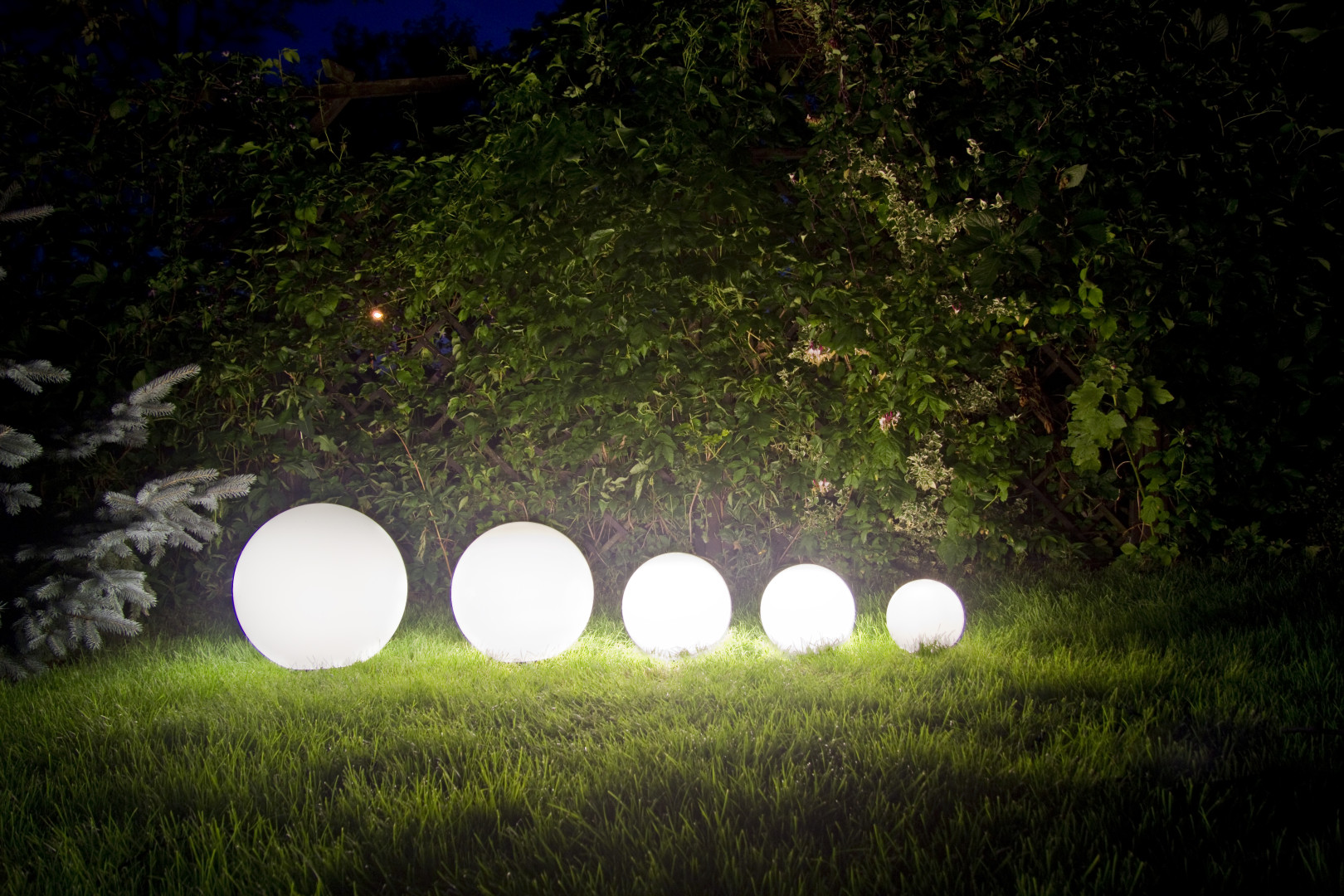
One of the greatest advantages of lighted garden globes is their variety of sizes and proportions, which offers great possibilities for creating cohesive and visually striking garden arrangements. Choosing the right globe size helps emphasize the character of the space, add depth and rhythm, and highlight important elements of the garden architecture.
Small garden globes – subtle lighting for flower beds and pathways
Globes with a diameter of around 20 cm work perfectly as subtle lighting accents. They can be placed among plants, along pathways, or near a terrace. Thanks to their small size, they provide gentle illumination and highlight the composition of the garden.
Medium-sized garden globes – the most versatile solution
Lamps with a diameter of 25–30 cm are the most versatile garden globes. They fit well in both modern and classic gardens. They are often placed on lawns, near the entrance to the house, or along garden pathways.
Duże kule ogrodowe – efektowna dekoracja ogrodu
Large lighted garden globes with a diameter of 40–50 cm can become the central element of a garden arrangement. They look particularly impressive in open spaces, near garden ponds, or in the representative part of the garden.
Tip: By combining globes of different sizes, you can create a natural, dynamic composition that looks light and modern. On the other hand, placing globes of the same size in a repeating pattern introduces order, symmetry, and elegance to the garden – an ideal solution for lovers of minimalist designs.
Why choose lighted garden globes?
Garden globes are more than just ordinary lamps. They combine modern design, functionality, and decorative appeal, and are increasingly becoming an essential element of outdoor spaces around the home.
- Modern design that suits any garden – their simple, geometric form fits perfectly into modern, minimalist gardens as well as spaces designed in a classic, romantic, or rustic style.
- Garden decoration by day and lighting after dark – during the day they serve as elegant decorative elements, highlighting plants, flower beds, and the architecture of the house. After sunset, they become a subtle, atmospheric source of light that creates a cozy ambience and turns the garden into a space for relaxation and social gatherings.
- Flexible arrangement possibilities – the availability of different sizes allows you to create various groups and compositions suited to the layout of the garden. Combining globes of different sizes creates a natural sense of movement, while repeating globes of the same size introduces order, symmetry, and elegance – ideal for fans of minimalist or geometric designs.
- Functional lighting – lighted garden globes work well in areas that require additional illumination, such as along pathways, near terraces, driveways, or relaxation zones. They not only improve comfort when using the garden after dark but also increase safety for household members and guests.
- Durability and ease of use – most are made from durable materials that protect them from weather conditions such as rain, wind, and UV radiation. As a result, the lamps maintain their aesthetic appearance for a long time. Garden globes are also easy to install – they can be placed securely on lawns, driveways, or in planters, making them convenient to use.
By choosing garden lighting in the form of globes, you gain a solution that is not only practical and durable, but also stylish and timeless. It is a way to create an elegant, modern garden that looks great both during the day and in the evening.
Where is the best place to position lighted garden globes in the garden?
Garden globe lamps not only illuminate the space but also help create the atmosphere of the garden. They can serve as a subtle backdrop for plants, an elegant accent highlighting the architecture of the house, or a striking decoration that attracts attention.
Their simplicity and geometric form make them extremely versatile – they blend well with greenery as well as with other lighting elements such as path lights, wall lights, or in-ground fixtures.
Thanks to this, lighted garden globes can be used in many different ways, allowing you to create a cohesive and visually striking garden arrangement:
- Lighting for garden paths and walkways – placing lamps along a path or walkway gives the space an elegant character while also increasing safety after dark. The globes can be arranged at regular intervals to emphasize the rhythm of the path or in irregular groups for a more natural, organic effect.
- Garden globes on the terrace – lighted globes placed around terrace furniture create a cozy atmosphere perfect for evening relaxation. Combining them with wall lights, floor lamps, or ambient LED lighting helps create a layered lighting composition that is both functional and decorative.
- Lighting for flower beds and lawns – placed among plants, they highlight their shapes and colors, while during the day they also serve as decorative elements themselves. They can be arranged in groups or along the edges of flower beds to create the effect of light, “flowing” illumination that draws the eye.
- Garden globes near a pond – the spherical shape reflected in the water surface creates a unique visual effect, adding elegance and a touch of luxury to the garden. It is worth combining different globe sizes and experimenting with their placement along the water’s edge to create a sense of depth and subtle movement of light.
- Representative entrance and driveway – globes placed near the gate, along the main pathway, or around the driveway highlight the character of the property and give it a prestigious appearance at first glance. Arranging globes of different heights or sizes allows you to create a dynamic, attractive composition that guides guests toward the entrance.
With the right placement of lighted garden globes, you can achieve a variety of effects – from subtly highlighting plants and architectural elements to creating striking illuminations that give the garden a unique character after dark. It is a simple way to introduce elegance, cohesion, and a cozy atmosphere that encourages evening relaxation.
How many garden globes should you use?
The number of garden globes depends mainly on the size of the garden and the areas you want to illuminate. In small gardens, 3–5 light points are often enough to gently highlight the most important elements of the space – for example, a path leading to the house, a section of the lawn, or the seating area near the terrace.
In medium and larger gardens, it is worth using more lamps so that the garden lighting is even and functional. Garden globes can then be arranged in several zones – along pathways, on the lawn, near plant beds, or close to the terrace. This way, the light not only improves visibility after dark but also emphasizes the layout of the garden and its key features.
Installing Garden Globes – Practical Tips
- Planning the electrical installation. It is best to include lighted garden globes already at the stage of planning the garden lighting. This allows the cables to be routed in the right places and the outdoor sockets to remain safe and discreetly hidden.
- Safety first. Use cables and sockets designed for outdoor use (IP44 or higher) to power the globes. Before starting any installation work, remember to switch off the power at the distribution board and inform others about the work being carried out.
- Stable placement. Lighted globes should be installed on a stable, solid surface so they remain resistant to shifting or tipping over in strong winds. Dedicated bases can be used for installation, or you can prepare them yourself—for example using concrete or stone, matching the style of the garden.
- LED light sources. For garden globes, LED light sources are the best choice. They are energy-efficient, durable, and do not heat up as much as traditional bulbs. They also offer different light colors—from warm light, ideal for relaxation, to neutral or cooler tones that emphasize the modern character of the garden
- Combining with other types of lamps. Lighted globes pair well with other types of outdoor lighting, such as path lights, wall lights, or in-ground fixtures. Combining different lighting forms helps create a cohesive and functional garden lighting system.
Are garden globes lighst a good choice for garden lighting?
Garden globes lights are a solution that combines decorative appeal with practical lighting for the space around the home. Thanks to their simple shape and the variety of available sizes, globe-shaped lamps can be matched to almost any garden.
When properly arranged, lighted garden globes highlight the architecture of the garden, illuminate pathways, and create a pleasant atmosphere that encourages evening relaxation. They are a timeless element of outdoor lighting that works well both in small gardens and in larger, more representative spaces.
If you would like to learn more about planning lighting around your home, also read our article “Which lamps should you choose for house façade lighting”, where we discuss the most popular solutions and practical ways to arrange outdoor lights.
FAQ - Frequently Asked Questions About Garden Globes
Which garden globes lighst should you choose for your garden?
It is best to choose garden globes made from materials resistant to weather conditions and compatible with energy-efficient LED light sources. An appropriate IP rating for outdoor use is also important.
Where is the best place to position lighted garden globes?
Lighted globes can be placed along garden paths, on the lawn, near the terrace, or close to a garden pond. They are also often used near the entrance to the house or along the driveway.
What size garden globes should you choose?
Small globes work well near flower beds and pathways, medium ones are the most versatile, while large garden globes can serve as a decorative focal point in the garden.
Are garden globes suitable for a terrace?
Yes, garden globes work perfectly on a terrace. They create atmospheric lighting for evening relaxation and pair well with wall lights or path lights.
How should you plan garden lighting with globe lights?
It is best to place globes in areas that need soft illumination, such as pathways, the terrace, or relaxation zones. Combining globe lights with other types of garden lighting helps create a cohesive and functional outdoor lighting system.