


Light Bulb for a Garden Lamp – How to Choose the Right Base, Wattage, and Light Color for an Outdoor Fixture
A light bulb for a garden lamp must match the fixture’s base type, technical specifications, and installation location. Today, LED light sources are the most common choice for outdoor lighting, but selecting the right technology alone is not enough. You also need to consider the lumen output, wattage, and color temperature to achieve the desired effect at the entrance, along pathways, on the terrace, or throughout the garden. Find out how to choose the right bulb for your outdoor lamp!
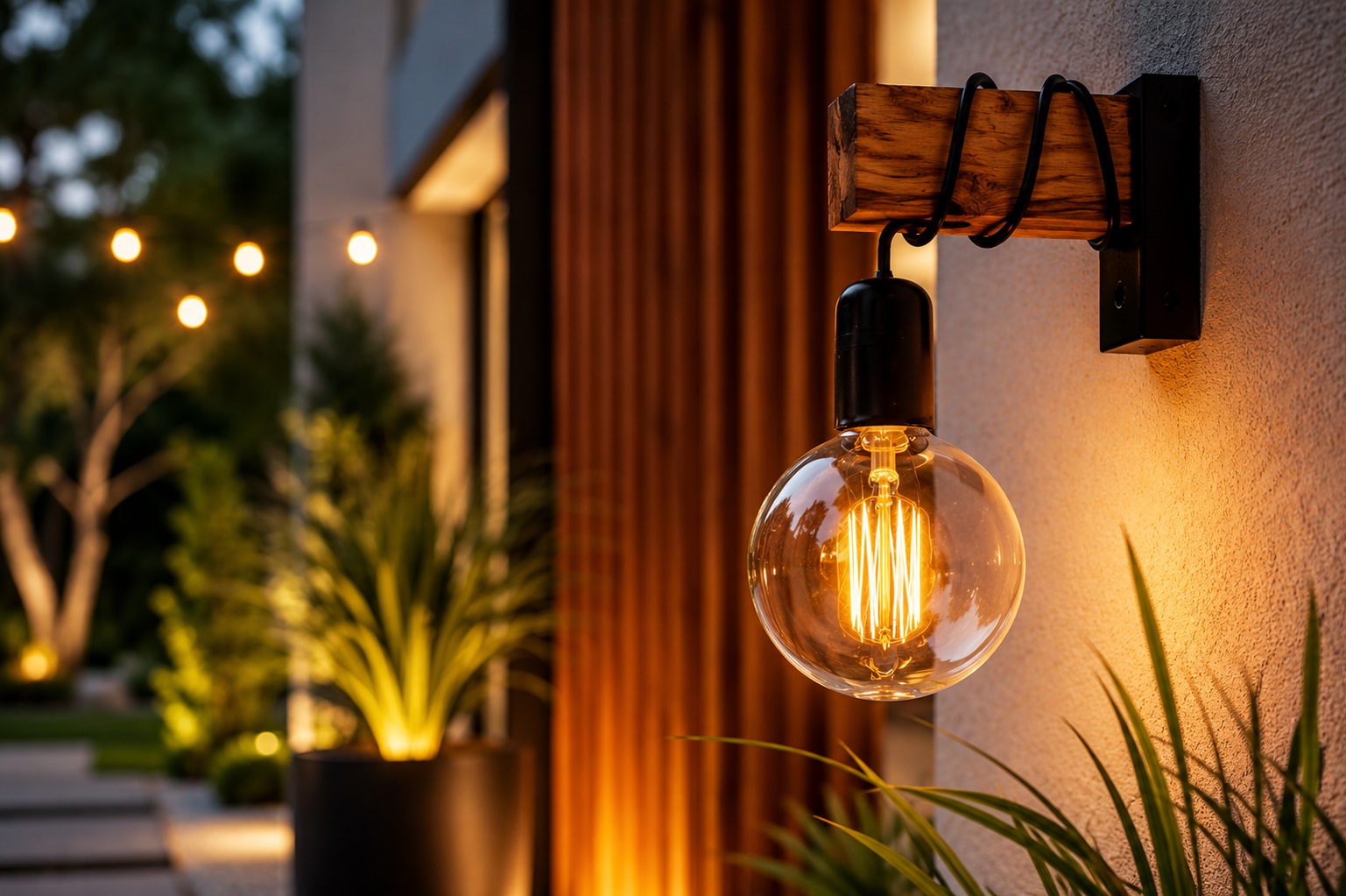
Garden Lamp Bulb – Key Information
- When choosing an LED bulb, pay attention primarily to the luminous flux (lumens) and only secondarily to the wattage. It is the lumen value that indicates how much light the bulb will actually produce.
- For entrance areas and exterior walls, LED bulbs rated at around 4–8 W are usually sufficient, while 2–5 W bulbs are commonly used in low pathway lights.
- A warm white color temperature (2700–3000 K) is well suited to terraces, gazebos, wood, and brick surfaces, whereas a neutral white color temperature (4000 K) provides better visibility on stairs, driveways, and modern building façades.
- Before purchasing, check whether the fixture is designed for a replaceable light source or features an integrated LED module, as this determines whether you can choose and replace the bulb yourself.
What Types of Bulbs Are Used in Garden Lamps?
Today, LED bulbs are the most commonly used light sources in outdoor fixtures. This solution offers lower energy consumption and, in fixtures with replaceable light sources, also allows you to choose a color temperature that best suits a specific area around the home. Our range includes both lamps with replaceable bulbs, such as the Cube CB-330 DG, Adela 7001 BL and Pabla M4030, as well as models with integrated LED modules, for example the Barel Kwadrat BKW-1000.
How to Choose the Right Bulb for Your Lamp? Start by Checking the Base Type
The base type is the most important parameter that determines whether a bulb is compatible with an outdoor light fixture. In garden lighting, the most common options include:
- E27 base (the so-called large Edison screw) – the most commonly used base type in garden lighting. It is found in many wall lights, bollard lights, and lanterns, including the FEBE, TAO, and Retro Maxi Kwadrat series. It offers a very wide selection of compatible light sources, ranging from standard LED bulbs to decorative filament models.
- GU10 base – most often used in fixtures designed for directional lighting of selected outdoor features, such as façade details, trees, or shrubs. As a result, it is a popular choice for garden spotlights, floodlights, and up/down wall lights.
- GX53 base – a modern, low-profile base used in slim, minimalist outdoor fixtures. Thanks to its wide beam angle, it is well suited to applications where diffused, even illumination over a larger area is required.
- E14 base (the so-called small Edison screw) – mainly used in smaller wall-mounted fixtures and decorative outdoor lamps. Due to its compact size, it is typically chosen for applications where aesthetics and a discreet lighting design are important.
If you want to check which bulb is compatible with your chosen garden lamp, refer to the product specification page.
Tip! In addition to the base type, be sure to check the bulb’s dimensions. Not every E27 or E14 bulb will fit inside the shade or housing of a particular fixture. This is especially important when choosing large decorative filament bulbs or models with an increased diameter.
Determine the Wattage and Light Output
With modern LED bulbs, the most important parameter is the luminous flux, measured in lumens (lm). This value indicates the actual amount of light produced by the bulb. Wattage (W), on the other hand, primarily reflects energy consumption and may vary between products that provide a similar level of brightness.
The bulb wattage should be selected according to the type of area or feature being illuminated. For example:
- At the entrance to a house or garage, LED bulbs rated at approximately 4–8 W, producing around 300–800 lumens, are usually sufficient. This range provides enough light to clearly illuminate the door, handle, and house number.
- For smaller bollard lights and pathway fixtures, light sources rated at approximately 2–5 W with a luminous flux of 200–500 lumens are commonly used. This is enough to illuminate the surface while avoiding excessively bright lighting.
- For larger fixtures (such as spherical garden lamps), you can choose LED bulbs rated at around 11–15 W and producing 1,100–1,500 lumens if you want to provide stronger illumination for a specific area of the property.
- For terraces and gazebos, it is generally best to avoid overly bright lighting. For this reason, LED light sources rated at approximately 4–6 W are most commonly selected, as they create a softer and more relaxing atmosphere after dark.
Traditional Bulb Wattage vs LED Bulb Wattage – Conversion Guide
When using LED bulbs, it is important to remember that lower wattage does not necessarily mean less light output. The values below are approximate, but they provide a useful guide for comparing traditional incandescent bulbs with their LED equivalents.
| Traditional Incandescent Bulb | LED Bulb | Luminous Flux |
| 25 W | 2-3 W | 200-250 lm |
| 40 W | 4-5 W | 300-500 lm |
| 60 W | 6-8 W | 500-800 lm |
| 75 W | 8-10 W | 800-1100 lm |
| 100 W | 11–15 W | 1100-1500 lm |
Comparison of Traditional Bulb Wattage and Their LED Equivalents.
How to Choose the Right Number of Lumens for Different Areas of the Garden?
The required brightness depends on the function the fixture is intended to perform.
Decorative and Orientation Lighting: 200–400 lm
This range is ideal for low bollard lights and fixtures used to define pathways, flower beds, or garden borders. The purpose of the light is to mark the route and create ambiance rather than illuminate the entire area like a spotlight. A good example is the Cube CB-330 DG, a 33 cm high bollard light with an E27 base and a maximum rating of 1 × 20 W. In this type of fixture, an LED bulb rated at around 2 W is usually sufficient.
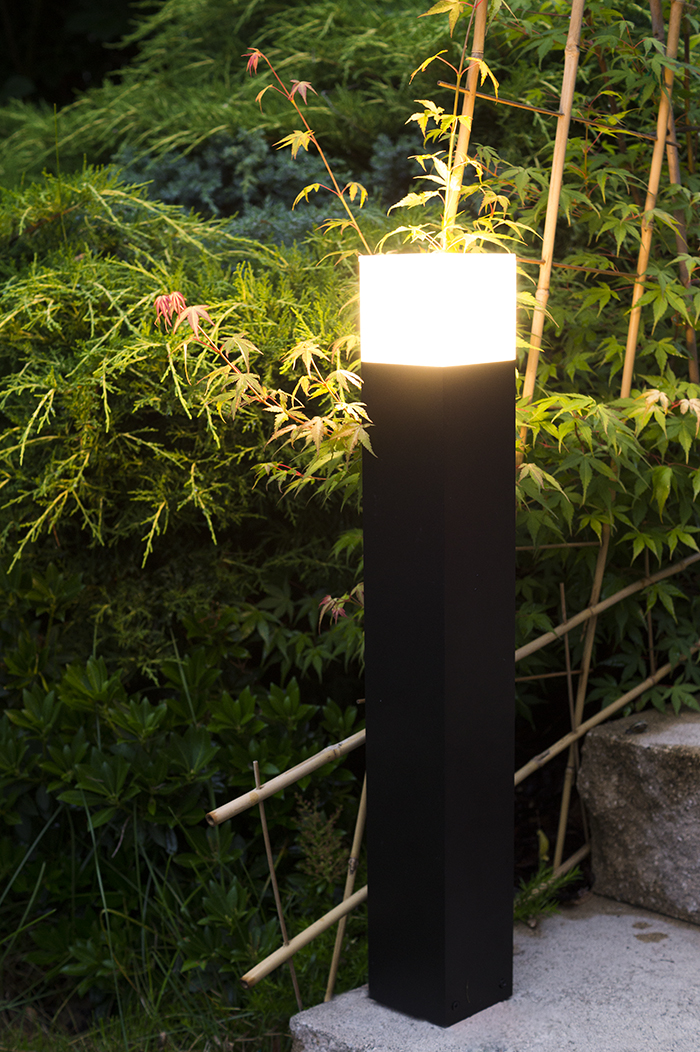
Bollard Light Cube CB-330 DG
Lighting for Relaxation Areas and Building Façades (400–700 lm)
For a fixture such as the Adela 7001 BL, which features two E27 sockets, you can use two bulbs with a maximum wattage of 60 W each. If energy efficiency is a priority, LED light sources are an excellent choice. Two 6–8 W LED bulbs will provide bright illumination for an entrance area, while two 5 W LED bulbs will create a softer and more subtle lighting effect.
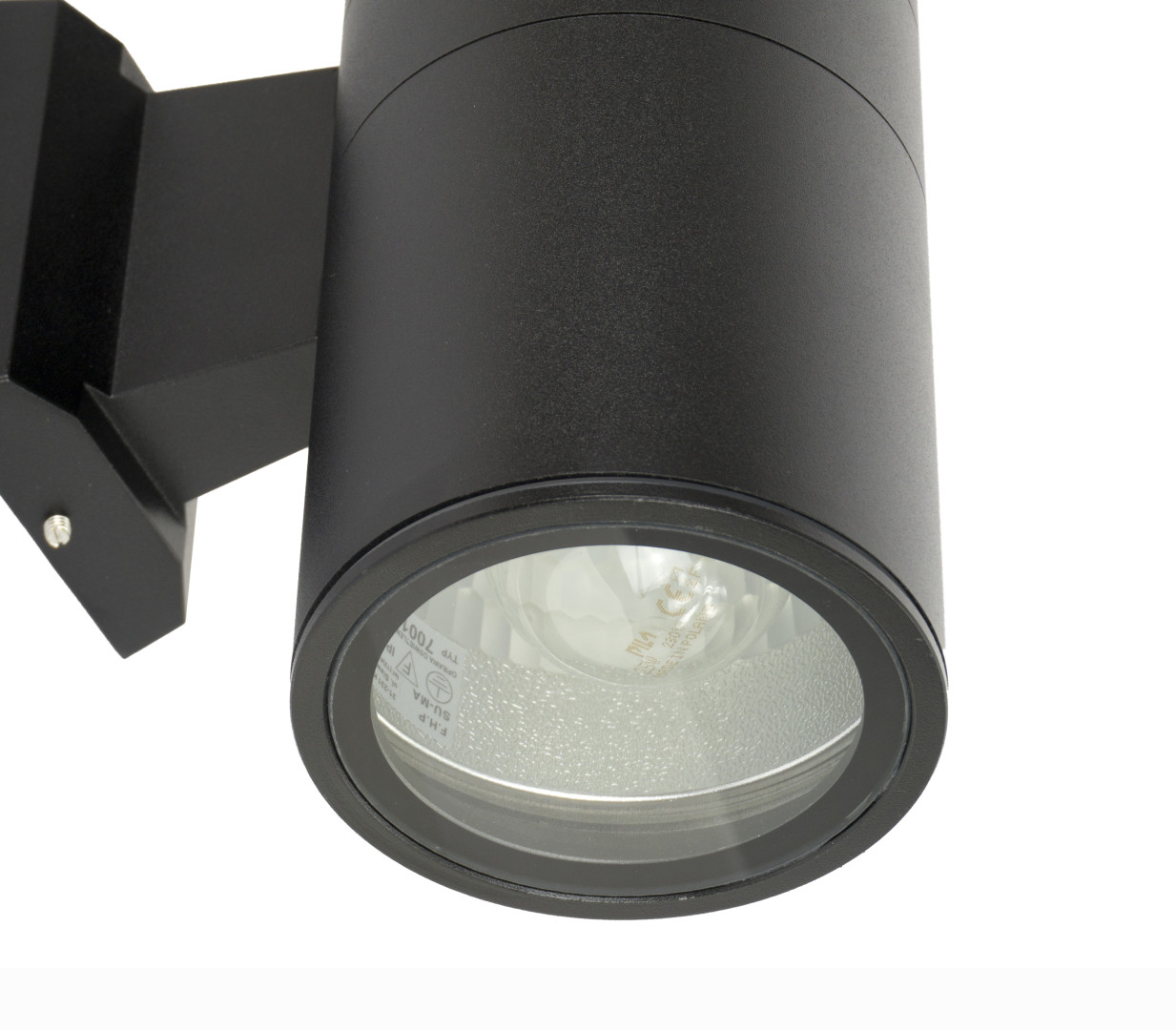
Modern Outdoor Wall Light Adela 7001 BL
Functional Lighting: Above 800 lm
Tall garden lanterns (for example, the Kule Classic pole-mounted models, adjustable to nearly 3 metres in height), in-ground driveway fixtures (such as the Pabla), and motion-sensor lights require more powerful light sources. For these types of fixtures, LED bulbs rated from around 8 W up to 15 W are most commonly used to provide clear illumination for driveways, garages, and darker areas around the property.
Warm or Neutral White: How to Choose the Right Light Color for an Outdoor Fixture?
The color temperature of light affects the appearance of the façade, plants, and the entire area around your home, so it is worth choosing a light color that matches both the finishing materials and the intended function of the fixture.
- Warm White 2700–3000 K
- Neutral White 4000 K
- Cool White (powyżej 5000 K)
Provides a softer, more gentle light and is better suited to areas where you want to create a calm evening atmosphere. This color temperature range works particularly well around terraces, gazebos, wooden elements, brick surfaces, and more traditional architecture. Warm light also enhances the appearance of plants and greenery.
Produces a cleaner and more distinct light. It reveals the colors of paving, stairs, fences, and modern materials more accurately. For this reason, this range is often chosen for entrances, driveways, fence lines, and other areas where lighting is intended to improve visibility and ease of movement after dark.
Can appear more technical and less inviting, although it is sometimes used in modern architectural settings and in lighting designed primarily for functional or security purposes.
Learn more: Light Color in Outdoor Lighting – How to Choose the Right Color Temperature and What to Consider?
Pay Attention to the Type of Fixture
Before purchasing, check whether the fixture is designed for a replaceable bulb or operates with an integrated LED module.
In the first case, you can choose the light source yourself. In the second, you must use the solution specified by the manufacturer. To avoid compatibility issues, always verify the fixture type and its permitted technical specifications before making a purchase.
Choose High-Quality LED Bulbs
A high-quality LED bulb offers more than just lower energy consumption—it also provides greater durability and more comfortable lighting. In the case of garden lamps, which often operate for many hours and are exposed to changing weather conditions, it is worth choosing reliable light sources with verified performance specifications.