


Integrated LED or a Light with a Replaceable Bulb? Which Solution Should You Choose?
Integrated LED and replaceable bulbs differ primarily in how the light source is positioned within the light fixture. In the first case, it is an integral part of the fixture, while in the second, it can be removed and replaced with another one. This difference is particularly important when it comes to replacing the light source, changing its color temperature, or servicing the light fixture.
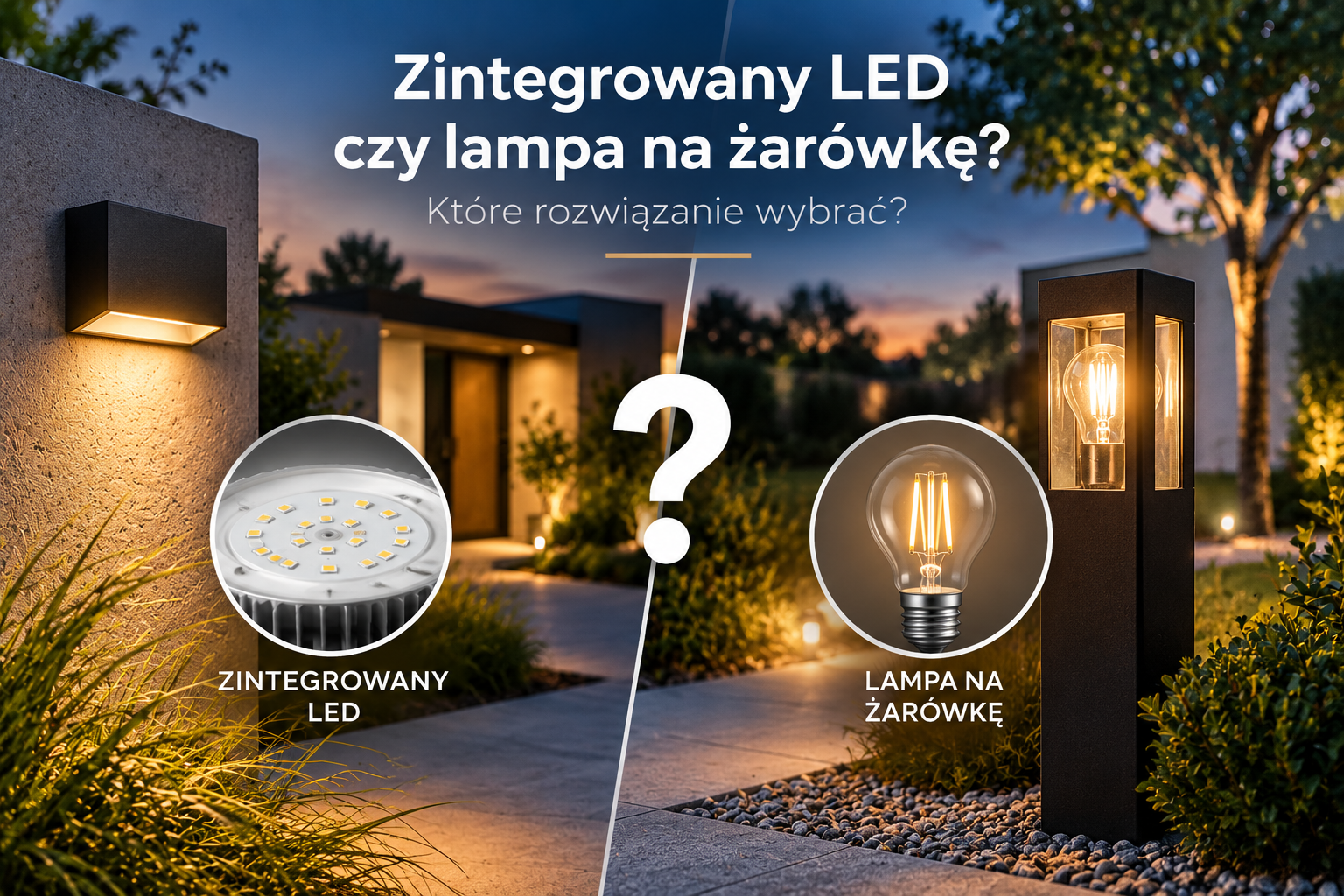
Integrated LED or a Light with a Replaceable Bulb – Key Information
- A light with an integrated LED does not have a standard bulb that can be unscrewed and replaced with a new one.
- With a light designed for a replaceable bulb, you only replace the light source without having to replace the entire fixture.
- With a light designed for a replaceable bulb, you can use an LED light source as long as it matches the socket and the parameters specified by the manufacturer.
- With a replaceable bulb, you can later change, among other things, its color temperature and luminous flux within the range permitted for the particular fixture
- A failure of an integrated LED does not necessarily mean that the entire light needs to be discarded. Depending on the fixture's design and the manufacturer's recommendations, replacing the LED module or power supply components may be possible to do yourself or may require professional assistance.
What Is the Difference Between Integrated LED and a Light with a Replaceable Bulb?
The difference becomes most noticeable when the light source reaches the end of its life or when you want to change its parameters. With a light designed for a replaceable bulb, you can easily replace the light source with a new one, while with an integrated LED, the options for making changes depend on the design of the particular model.
It is worth distinguishing between these two concepts. A light designed for a replaceable bulb can also be an LED light. For example, a fixture with an E27 or E14 socket can be fitted with a suitable LED bulb. So we are not comparing LED technology with another type of light, but an LED integrated into the fixture with a replaceable light source.
What Does Integrated LED Mean?
In a light with an integrated LED, the diodes are part of the lighting system designed by the manufacturer. You do not choose a separate bulb, so the brightness and color temperature of the light are determined primarily by the specifications of the particular model. Before purchasing, check the luminous flux, color temperature, and light distribution, as well as the stated lifespan of the light source and the warranty terms. If you want to be able to adjust the color temperature or brightness later, make sure that the manufacturer has provided this feature in the particular model.
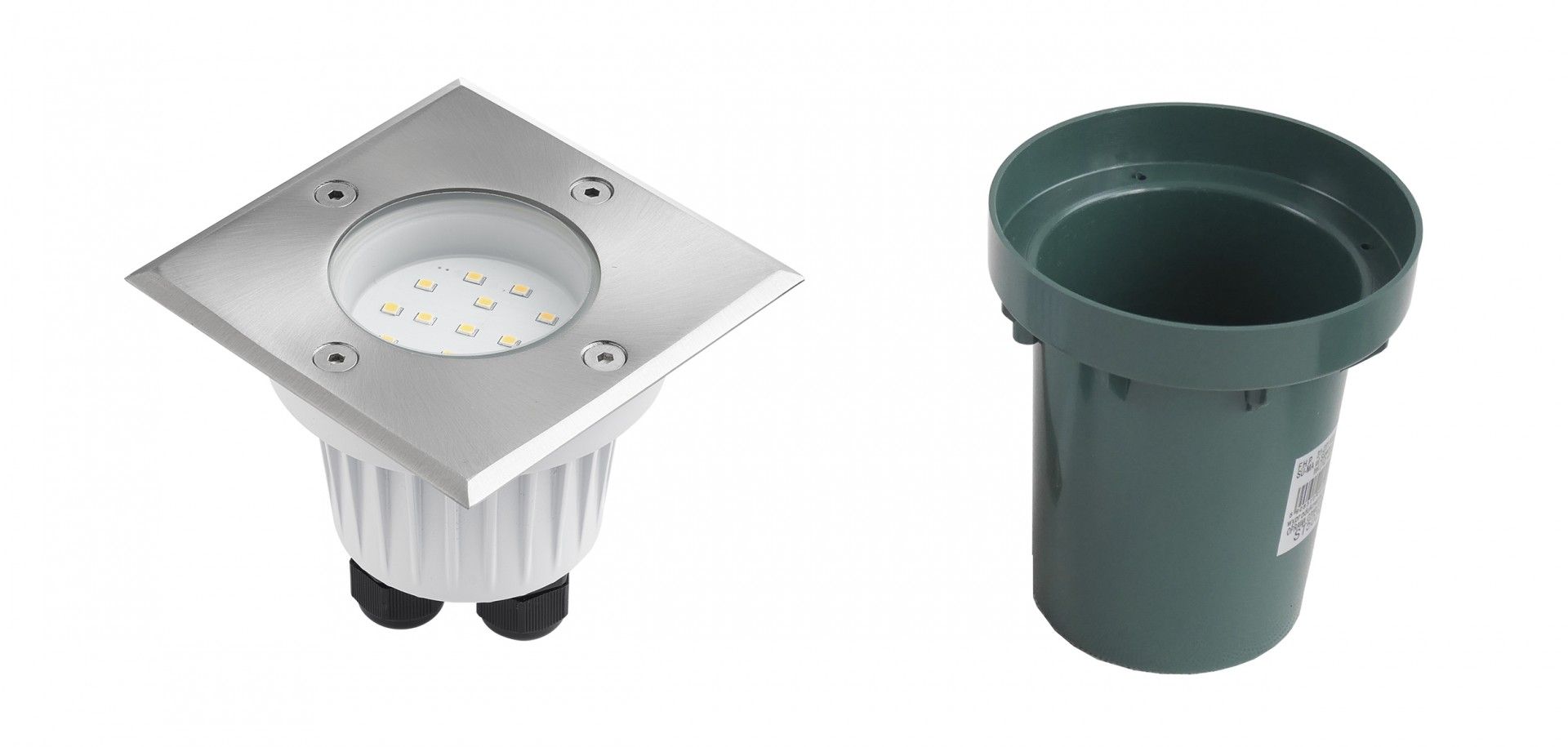
An example of a light with an integrated LED module – Leda ST 5024B driveway light
Integrated LED Has Failed – Do You Need to Replace the Entire Light?
The failure may affect the LED module itself or a component responsible for powering it. Therefore, before purchasing a light with an integrated LED, check the documentation to see whether the components can be replaced and whether you can carry out the replacement yourself or whether professional assistance will be required.
Integrated LED or a Light with a Replaceable Bulb – Which Should You Choose? Pros and Cons of Both Solutions
The choice depends primarily on whether you value the flexibility of replacing the light source later, or the specifications, design, and light output of the particular fixture.
Note! Energy efficiency should not be the main criterion when choosing between these two solutions. A light with a replaceable light source can also use an energy-efficient LED bulb, so compare the specifications of the individual light sources and fixtures.
The table below summarizes the advantages and disadvantages of both solutions.
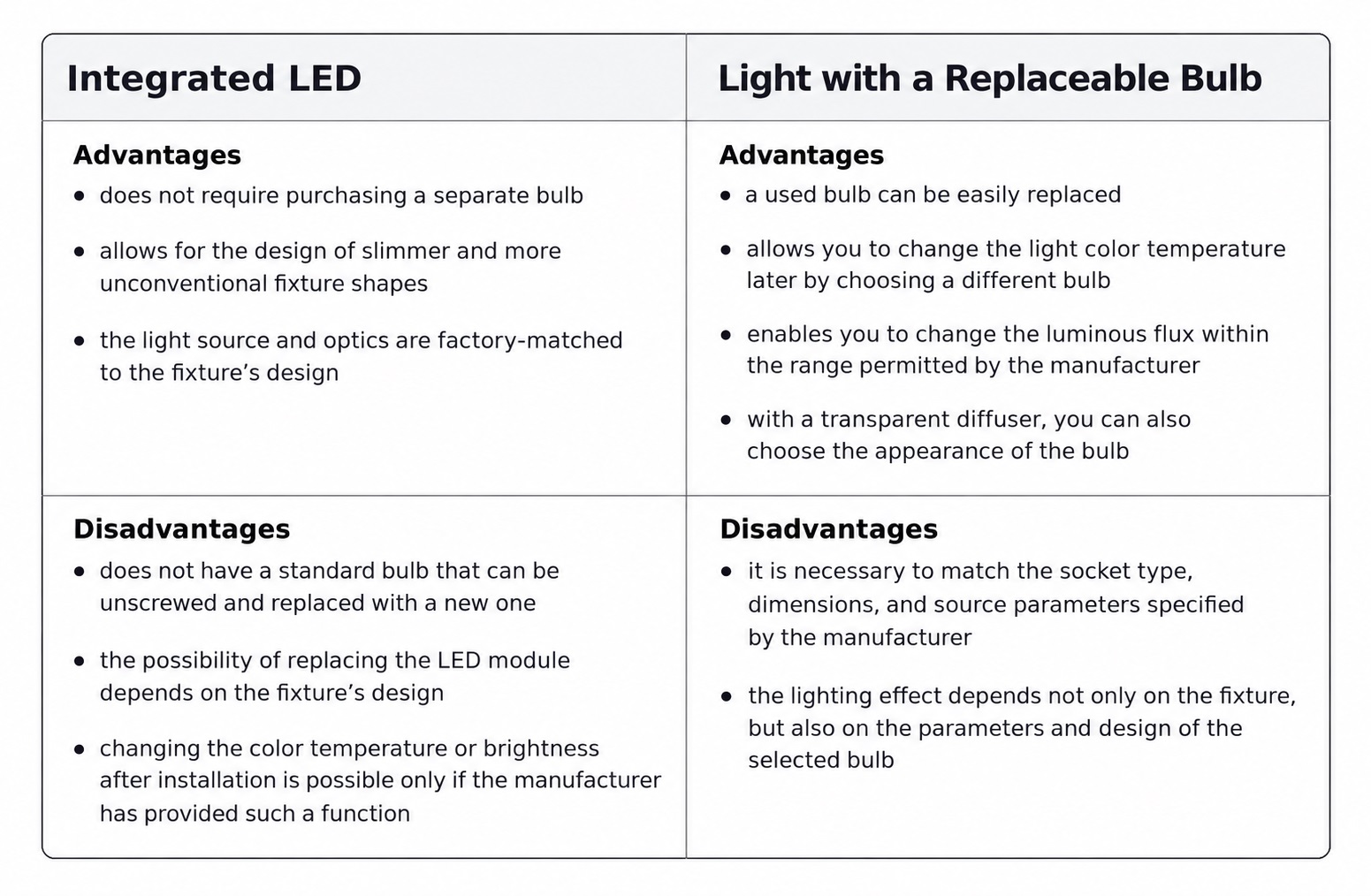
Integrated LED will be a good choice if the factory-set specifications and light output of the particular fixture meet your needs. If the ability to adjust the light source later and replace it yourself is more important, a light with a replaceable bulb will be more practical.
Our range includes both LED outdoor lights with integrated light sources and fixtures with replaceable bulbs. Compare the light output, specifications, and design of the fixture, and then choose the solution that will be most convenient for you.