


How to Light a Brick, Stone or Wooden House Façade? Modern Outdoor House Lighting
A brick, stone or wooden façade looks completely different after dark. Properly directed light can bring out the decorative potential of the chosen material. Find out how to light your house façade to highlight the character of the finish rather than simply illuminate the space.
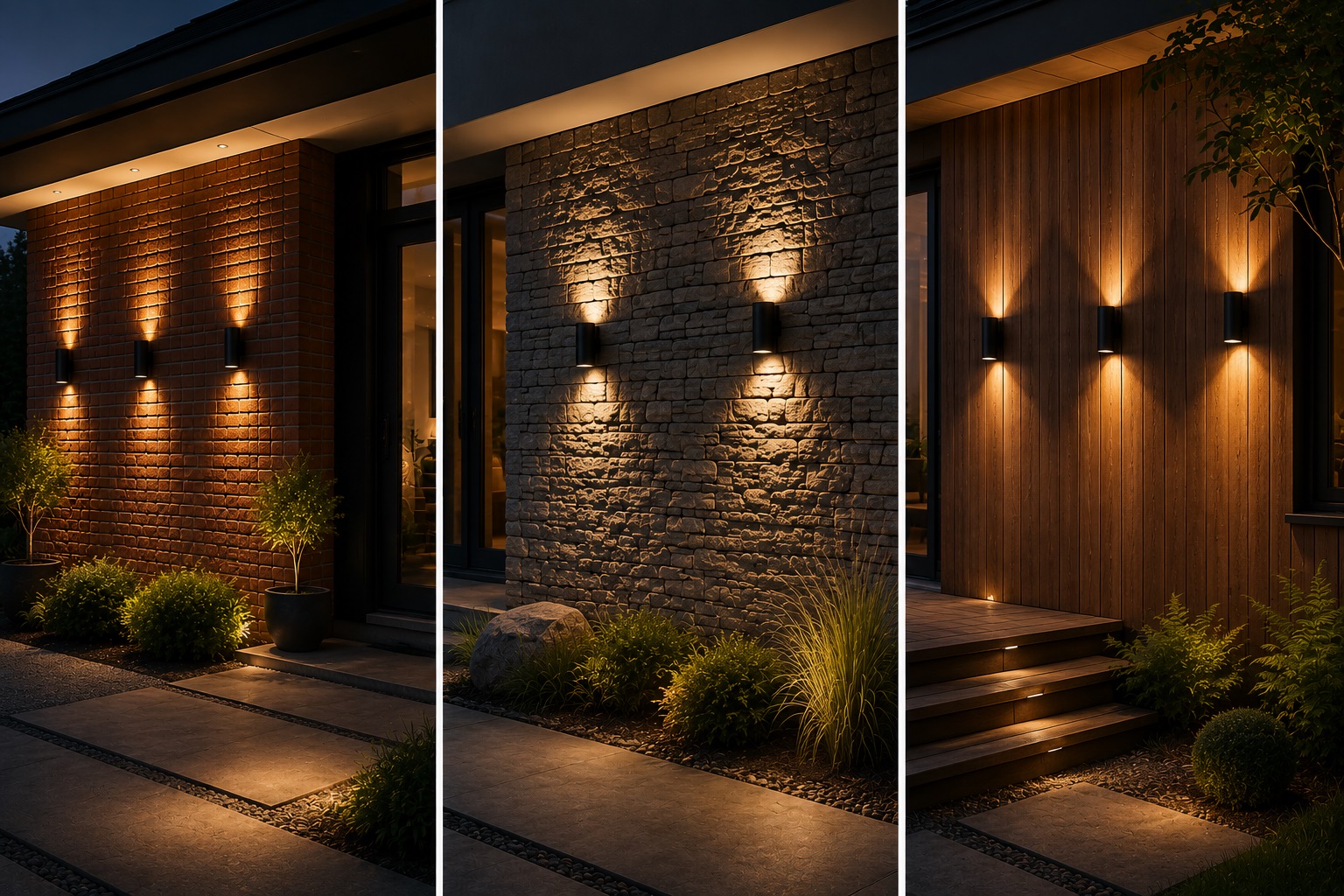
Outdoor Façade Lighting – Key Information
- Brick and stone are best illuminated with directional light that highlights the joints and uneven texture of the surface.
- Wood looks particularly attractive in warm light, which enhances its beige, honey and brown tones.
- Up-and-down wall lights are ideal for highlighting vertical sections of the façade and the texture of the material.
- The more irregular the surface, the more important the angle of the light becomes.
- The colour of the light fixtures can be matched to the window and door frames, roof, railings or other metal details.
How Does the Direction of Light Affect the Appearance of Brick, Stone or Wood?
Light directed at the right angle can reveal the texture of a façade in a more decorative way. The closer the beam runs to the surface of the façade, the more pronounced the shadows created by joints, protrusions and edges become. If you want to illuminate a larger section of the wall more evenly, a wider beam of light will be a better choice.
When positioning the light fixture, it is also worth checking where the beam ends. The light should primarily remain on the façade rather than shine into windows or above the roofline. If possible, check the effect after dark before finalising the position of the fixture – even a slight change in the lighting angle can have a noticeable impact on how the texture appears.
How to Light a Brick, Stone or Wooden Façade?
Each of these materials responds differently to light, so the lighting approach should be tailored to its colour, texture and surface pattern.
Lighting a Brick House Façade
With a brick façade, the main goal is to bring out the regular pattern of the joints. Light coming from above, below or slightly from the side creates short shadows along their edges, preventing the wall from looking like a flat surface after dark.
For clinker brick, you can choose a wall light mounted close to the wall, such as the Adela 8001 BL. The up-and-down light distribution highlights the surface above and below the fixture, while the black housing complements dark window and door frames. For red or brown brick, a warm colour temperature such as 2700–3000 K works particularly well. It enhances the warm tones of the material rather than introducing a cool contrast.
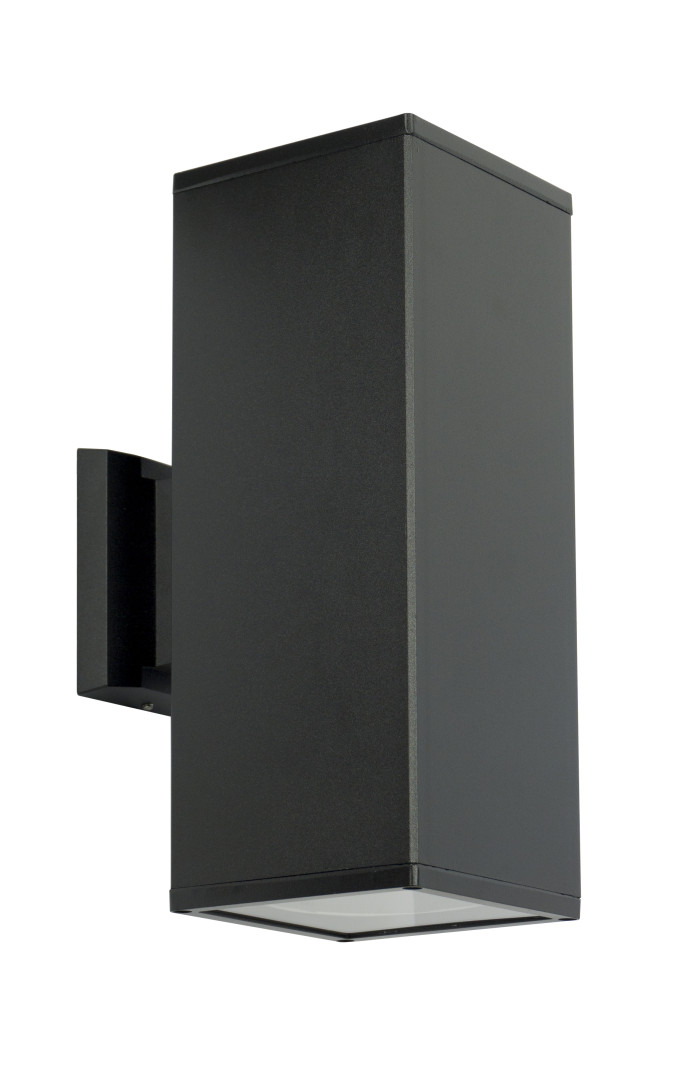
Up-and-down wall light Adela 8001 BL
Outdoor Façade Lighting for Stone
When lighting stone, the lighting technique should be adapted to the type of surface.
- Split or highly irregular stone cladding looks particularly good with light directed close to the wall, highlighting its recesses and raised areas.
- For smooth stone, a wider beam can be used to create a calmer and more even effect.
With this type of material, the ability to adjust the direction of the light can be particularly useful. A good example is the Ren RN-KPIR wall light, which features an adjustable beam angle. You can direct the light closer to the wall to emphasise the irregularities of the stone or set it wider if you want to illuminate a larger section of the façade. The fixture also allows you to choose between three colour temperatures: 3000, 3500 or 4000 K, making it easier to achieve the desired lighting effect.
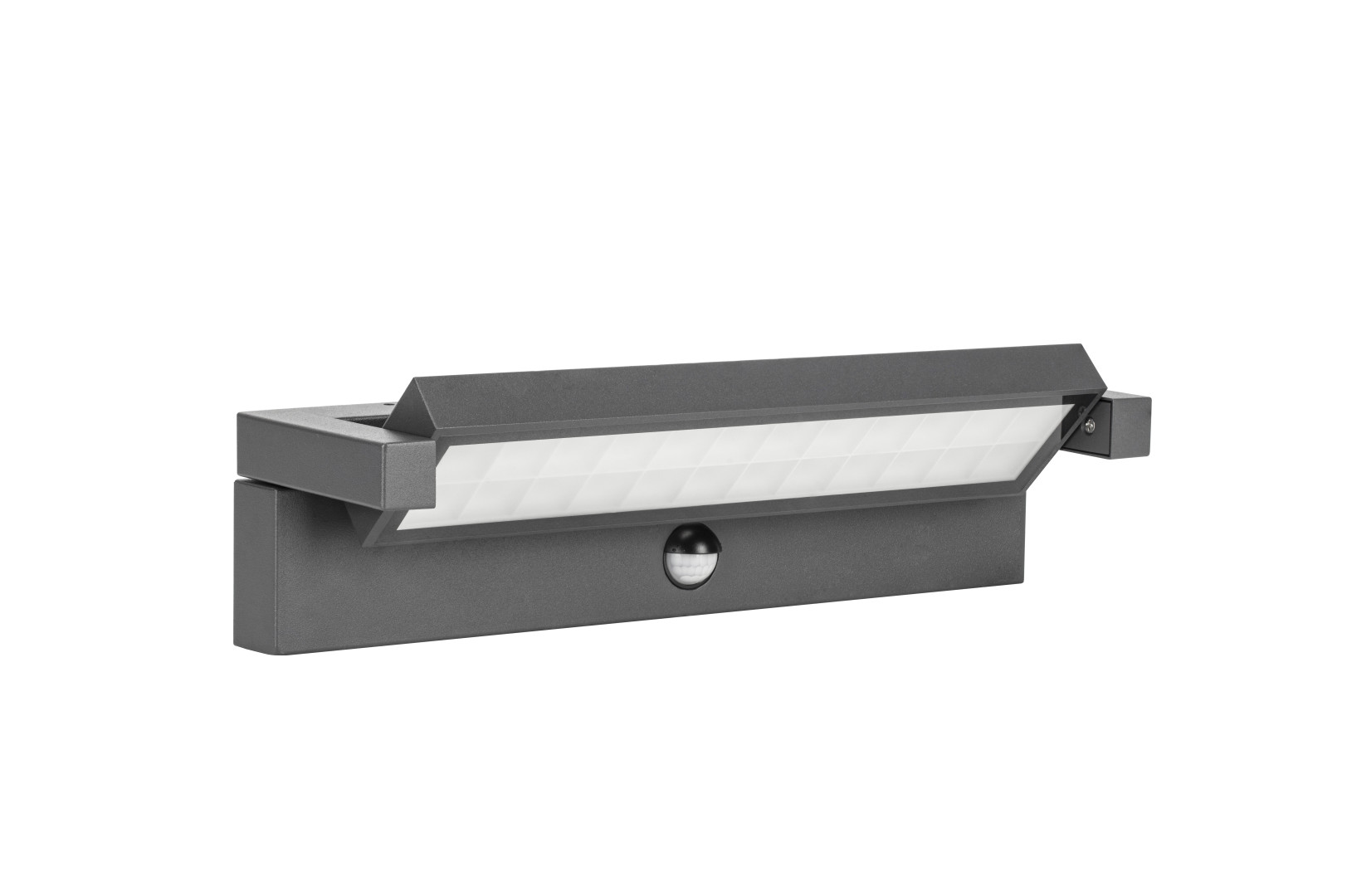
Outdoor wall light with motion sensor Ren RN-KPIR
A warmer colour temperature works well with beige and sandstone, while a more neutral light can complement grey and cooler-toned stone cladding.
Lighting a Wooden House Façadeu
A wooden façade looks particularly attractive in warm light, especially if you want to emphasise its beige, honey and brown tones. This colour temperature helps preserve the natural character of the material after dark.
When lighting wood, it is worth matching the lighting technique to the desired effect. Light directed closer to the surface will emphasise the arrangement and texture of the boards, while more diffused light will create a calmer, more even background. A fixture with a milky diffuser, such as the CORDOBA II wall light, works well for the latter approach.
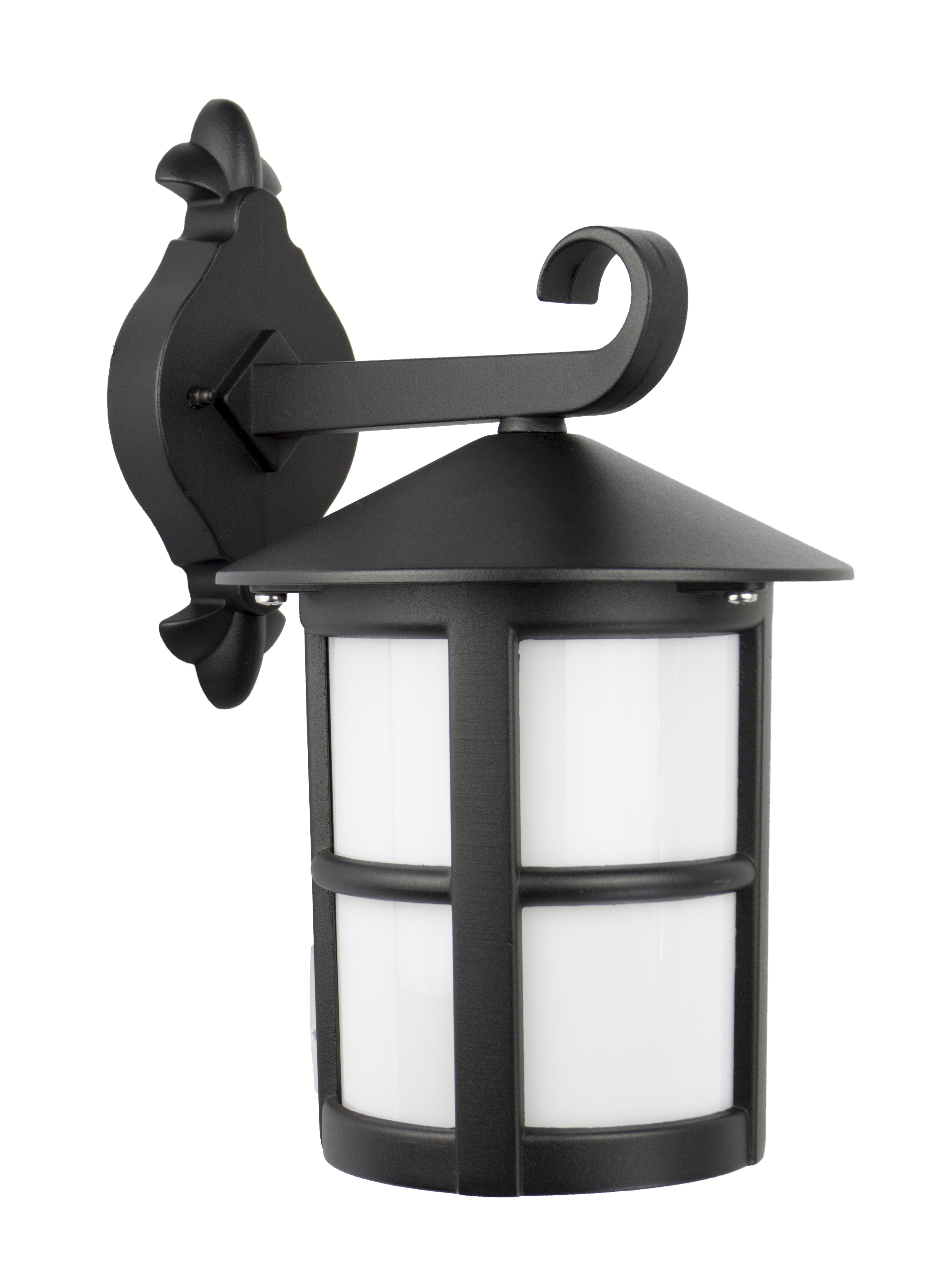
CORDOBA II Outdoor Wall Light
Directional or Diffused Light – Which Is Better for a Façade?
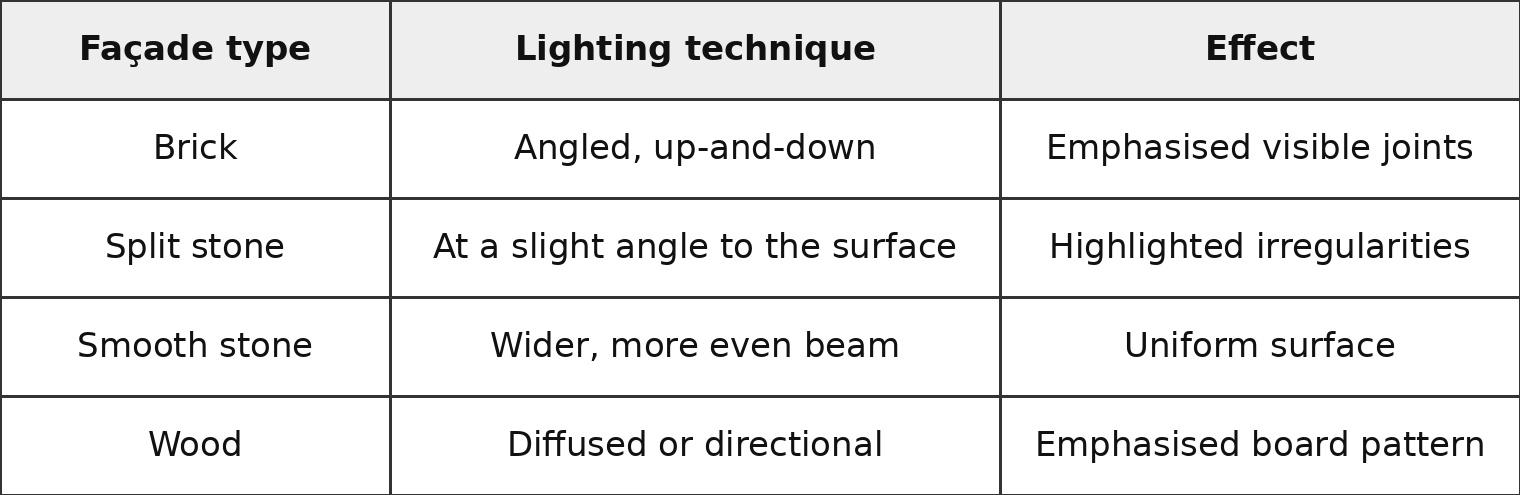
The lighting technique should primarily be chosen based on the texture of the material and the effect you want to achieve. We have summarised a few useful tips in the table below to make it easier to choose the right solution.
How to Match the Colour and Shape of a Light Fixture to Your House Façade?
The colour of the light fixture is best matched to elements that are already present on the building. A black or anthracite wall light works well with graphite-coloured window and door frames, a dark roof and metal details. On a light-coloured façade, it will stand out more, while on a dark façade, it will blend in more discreetly.
You may also be interested in: How to Illuminate Your House Number? 4 Light Fixture Ideas
For a house with large glazed areas, a flat roof and a façade combining render with wood or stone, simple geometric wall lights work particularly well. For clinker brick, a decorative entrance or a more traditional finish, you can opt for fixtures with a classic design.
What’s more, modern outdoor house lighting does not have to be identical on every wall. You can keep a consistent colour or use fixtures from the same series while adjusting the direction of the light to suit the façade material.
When choosing a light fixture, also pay attention to its IP rating. A fixture installed outdoors should be suitable for exposure to moisture, dust and weather conditions, while the required level of protection depends, among other things, on the installation location and how sheltered the fixture is. Explore our range of outdoor wall lights and choose models that complement the finish of your home.