


Jak podłączyć lampy ogrodowe szeregowo? Poradnik
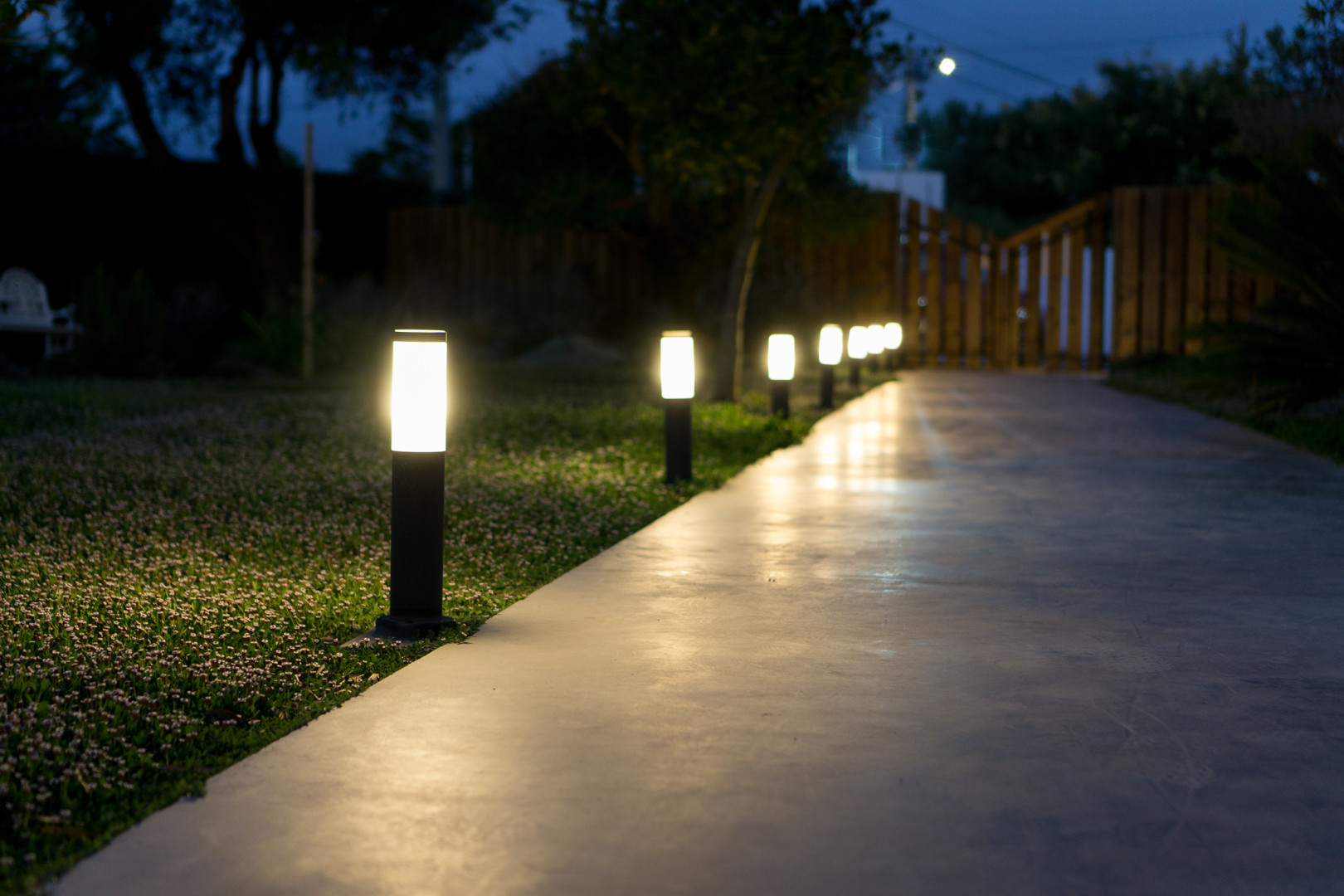
Chcesz zasilić kilka lamp jednym przewodem prowadzonym kolejno wzdłuż ścieżki lub podjazdu? Takie rozwiązanie bywa potocznie nazywane połączeniem szeregowym (w rzeczywistości instalacja ta pod kątem elektrycznym jest połączeniem równoległym wykonanym przelotowo), ale w typowej instalacji zasilanej napięciem 230 V oprawy łączy się równolegle. Przewód może przechodzić od jednej lampy do następnej, a każda z nich pozostaje osobnym odbiornikiem. Wyjaśniamy, jak poprawnie rozumieć taki układ i co zaplanować przed montażem.
Connecting Garden Lights – Key Information
- Typical 230 V outdoor lights are connected in parallel, not electrically in series.
- A cable can run from one light fitting to the next while the fittings remain connected in parallel.
- The division of an installation into circuits and lighting zones depends on factors such as the number of lights, their power consumption, their location and the control method.
- Outdoor installations require correctly selected cables, protective devices and measures to protect against electric shock.
Can Garden Lights Be Connected in Series?
Typical garden lights supplied at 230 V should not be connected in a conventional series circuit. In a series circuit, electrical loads are connected one after another in a single circuit. The same current flows through each load, while the supply voltage is divided between them.
If the circuit is interrupted, current can no longer flow through the entire circuit, so all the loads connected in series stop working.
How to Connect Garden Lights Supplied at 230 V
The power cable can run from one lighting point to the next, for example along a garden path. However, this does not mean that the lights are electrically connected in series. Each fitting is connected in parallel to the power supply and receives the voltage specified by its manufacturer. If a bulb in one light burns out, the other lights will continue to work.
| Good to know! This cable-routing arrangement is sometimes informally called a “series connection” because the fittings are positioned one after another, with the cable running between them. In a typical 230 V installation, however, the fittings are connected in parallel.
|
It is also important to distinguish between a failed light source and a fault in the electrical installation. A short circuit may cause a protective device to trip and disconnect the entire circuit. In this case, the other lights connected to that circuit will also go out. If the power cable or a loop-through connection is interrupted, the lights located beyond the point of damage may stop working. This does not mean that they were connected in series.
Important! The wiring arrangement depends on the installation design and the construction of the individual fittings. Not every light is designed to allow the cable to continue directly through its housing.
How to Plan a Single Circuit for Several Garden Lights?
First, determine the number and location of the lights, as well as how they will be switched on and off. This will help you plan the cable routes and lighting controls. The electrical installation parameters and protective devices should be selected by a suitably qualified professional.
Mark all lighting points on a site plan, such as bollard lights along a path, wall lights on the façade, and lights near the driveway and entrance to the house. Check the supply voltage and power rating of each fitting to estimate the expected electrical load. Cable cross-sections and protective devices must also be selected with regard to the cable route length, installation method and operating conditions.
You should also check the IP rating, which indicates the degree of protection provided by an enclosure against the ingress of solid objects and water. Both the light fittings and their electrical connection components must be suitable for the installation environment, including exposure to moisture, rainfall and potential mechanical damage.
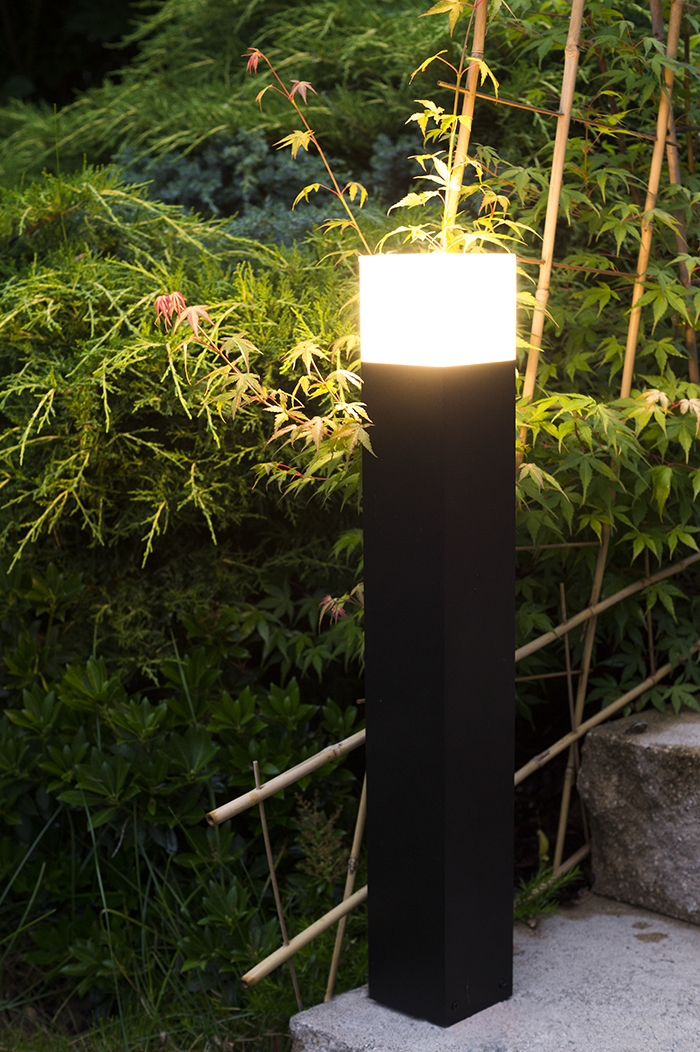
Once the installation has been planned, you can choose fittings suited to each location. Bollard lights work well along garden paths and walkways leading to the house. One example is the Cube CB-830 DG. This model operates at 230 V and is designed for a replaceable E27 bulb with a maximum power rating of 20 W.
Should All Garden Lights Be Connected to One Circuit?
Not all garden lights need to be connected to a single circuit. In a more extensive installation, it is worth considering dividing the lights into several circuits, depending on the number of fittings, their electrical load and the control method. You can also plan separate lighting zones, such as the entrance, garden path, terrace and driveway, so that all the lights do not have to switch on at the same time.
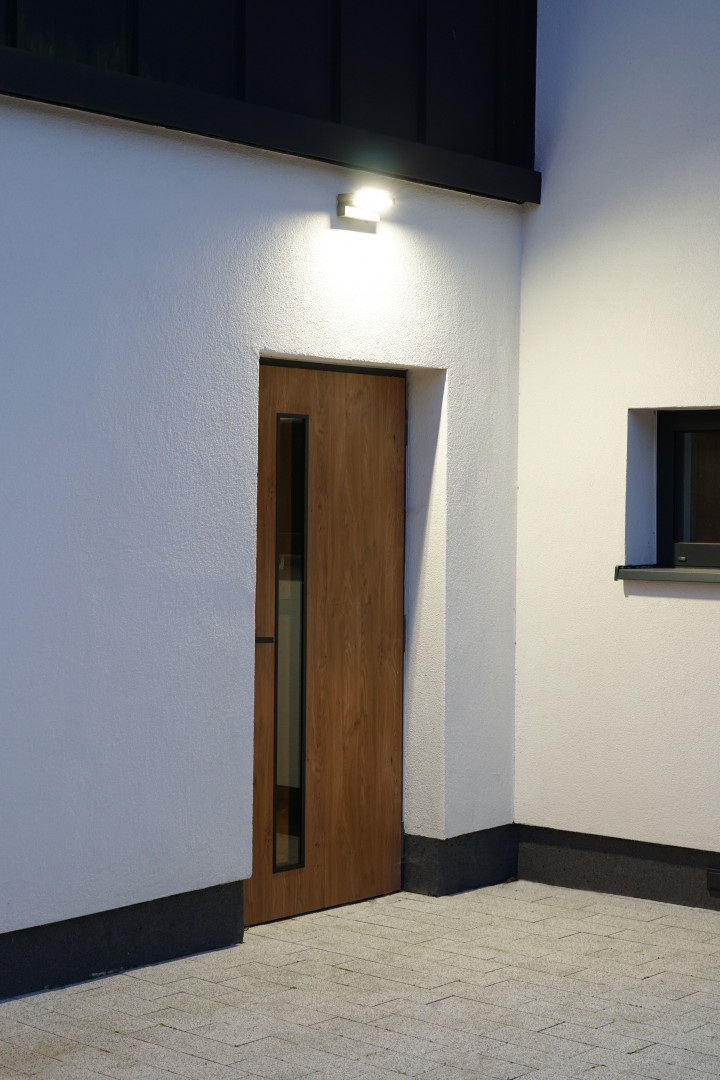
One of these zones could include a light that switches on automatically when motion is detected. The Ren RN20-KPIR is one example: a 230 V wall light with an integrated LED light source and motion and dusk sensors. When continuously powered, the sensor activates the light when motion is detected and the ambient light level meets the sensor's configured threshold. This allows the fitting to operate independently of the other lights in the zone.
Installing Garden Lights – When Do You Need an Electrician?
The method used to connect an outdoor light depends primarily on its power supply. You can install and connect fittings belonging to a ready-made 12 V or 24 V low-voltage lighting system yourself, provided the manufacturer has designed the system for DIY installation. Such kits usually include a power supply unit that plugs into a standard socket, along with ready-made connectors for linking the individual lights.
Remember! Even in low-voltage systems, the permitted connection arrangement and the maximum number of lights depend on the kit design and the power supply unit's specifications. Always follow the manufacturer's instructions.
For a light permanently connected to a 230 V electrical installation, the electrical connections should be made by a suitably qualified person. This includes wiring and cable connections, connecting the fitting to the installation, and work involving the distribution board and protective devices. You may prepare the mounting point for a freestanding outdoor light yourself in accordance with the manufacturer's instructions, provided that the work does not involve modifying the electrical installation.
Our store offers bollard lights, wall lights and other outdoor lighting fixtures designed for different areas around your property. Explore the available models and choose the fittings that best suit your lighting installation plan!